
Inboard Engine Repair: Preparing Your Boat for a Reliable Season
A boat that has spent months in storage should not immediately be taken on a long trip without checking its mechanical systems. Inboard engines can develop problems during periods of limited use, especially when fuel, fluids, batteries, cooling components, and hoses have not been inspected. Boat Work Times helps boat owners keep their vessels in working condition by addressing a variety of marine repair needs. For owners preparing their boats for another season, understanding the basics of Inboard Engine Repair can make it easier to recognize problems before they affect reliability on the water.
Why Seasonal Inspection Matters
An inboard engine can appear perfectly normal from the outside while developing issues during storage. Fuel can degrade, batteries can lose charge, seals can deteriorate, and moisture can contribute to corrosion.
A seasonal inspection provides an opportunity to check these systems before the engine is placed under a heavy load.
This is particularly important for boaters planning longer trips. Discovering a problem at the dock is much easier than dealing with the same problem several miles offshore.
Begin With a Visual Inspection
A visual inspection is a simple but useful first step. Before starting the engine, owners should look for obvious signs of trouble.
Areas worth checking include:
- Oil or coolant around the engine
- Cracked or deteriorated hoses
- Loose electrical connections
- Corrosion around terminals
- Damaged belts
- Signs of fuel leakage
- Worn engine mounts
- Unusual deposits or residue
A visual inspection cannot identify every problem, but it can reveal conditions that should be addressed before the engine is operated.
Check Fluids Before Starting
Engine fluids should be checked according to the manufacturer’s recommendations. Low or contaminated fluids can indicate maintenance needs or possible leaks.
Engine oil is particularly important because it lubricates internal components and helps control heat. Owners should look for unexpected changes in oil level or appearance.
Coolant levels should also be checked on engines equipped with closed cooling systems. Transmission fluid may require inspection as well, depending on the propulsion setup.
If fluid levels are unusually low, simply adding more fluid may not solve the problem. The source of the loss should be investigated.
Inspect the Cooling System
Marine engines depend heavily on their cooling systems because they operate under substantial loads.
Raw-water components can be affected by corrosion, debris, marine growth, or wear. Hoses and connections can also deteriorate over time.
During seasonal service, technicians may inspect the water intake, pump components, hoses, thermostats, and other parts of the cooling system.
Overheating should never be ignored. If the engine temperature rises beyond its normal operating range, the cause should be identified before continued operation.
Fuel Quality Can Affect Starting
Fuel problems are common after extended storage. Gasoline or diesel can degrade over time, while water and contaminants can enter the fuel system.
A contaminated fuel system may cause difficult starting, rough idling, hesitation, or reduced engine power.
Fuel filters should be inspected and replaced according to the appropriate service schedule. If contaminated fuel is suspected, additional inspection may be necessary before the engine is returned to regular operation.
Using clean, properly stored fuel can help reduce the risk of fuel-related problems.
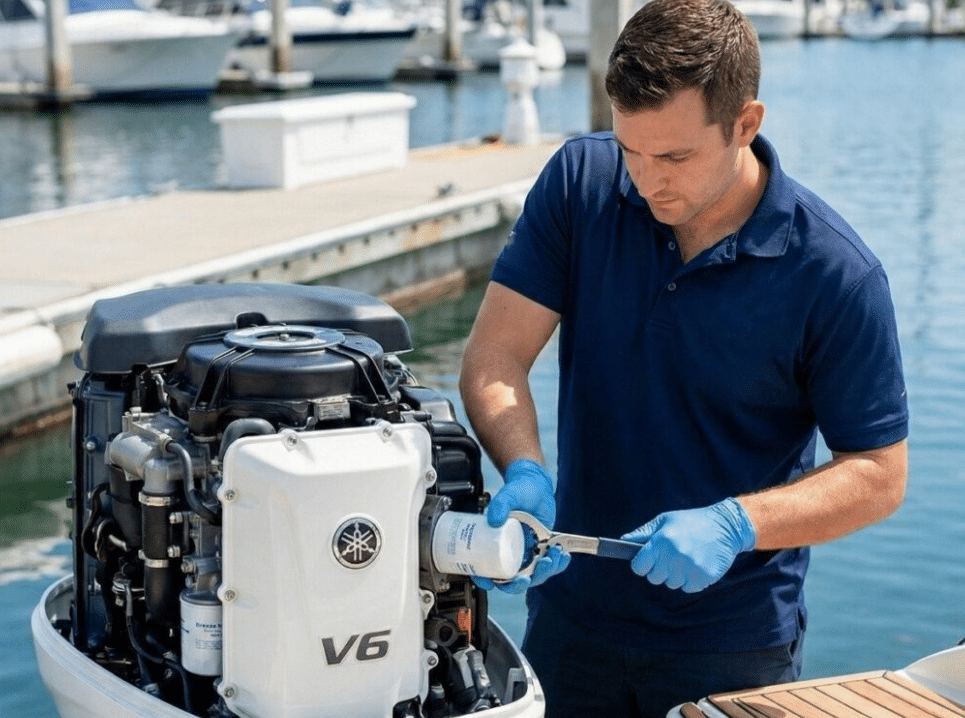
Battery and Electrical Connections Need Attention
A weak battery can make an engine appear to have a much larger mechanical problem. If the starter turns slowly or the engine does not crank normally, the battery and electrical system should be checked.
Marine environments can accelerate corrosion at battery terminals and electrical connections. Loose or corroded connections can create resistance and cause intermittent problems.
A seasonal inspection may include checking battery condition, terminals, grounds, cables, and charging performance.
Modern inboard engines can also rely on electronic sensors and control systems, making electrical diagnosis increasingly important.
Listen for Changes in Engine Operation
Once an engine has been inspected and started safely, owners should pay attention to how it sounds and behaves.
Unusual knocking, squealing, grinding, excessive vibration, or changes in idle quality may indicate a developing problem.
A healthy engine should operate within the normal characteristics specified by the manufacturer. Sudden changes deserve investigation, particularly when they appear together with warning lights, unusual temperatures, or loss of power.
Do Not Forget the Drivetrain
The engine is only one part of an inboard propulsion system. Transmission components, couplers, shafts, seals, and propellers also need attention.
A damaged propeller can create vibration and reduce performance. Shaft misalignment can place additional stress on drivetrain components, while worn seals may allow unwanted water intrusion.
If the boat experiences vibration or unusual propulsion behavior, technicians should inspect the complete system rather than assuming the engine itself is responsible.
When a Professional Inspection Makes Sense
Some routine checks can be performed by experienced boat owners, but professional service is appropriate when symptoms indicate a more complex problem.
Professional Inboard Engine Repair may involve diagnostic testing, compression checks, cooling-system inspection, fuel-system testing, electrical measurements, or examination of drivetrain components.
Professional diagnosis is particularly useful when an engine repeatedly overheats, loses power, produces unusual smoke, consumes excessive fluids, or develops persistent starting problems.
Identifying the actual source of a problem can prevent unnecessary parts replacement and reduce the risk of additional damage.
Creating a Maintenance Schedule
Seasonal preparation should be part of a broader maintenance strategy rather than a one-time activity.
Boat owners can keep records of oil changes, filter replacements, cooling-system service, battery checks, transmission maintenance, and other important work.
These records make it easier to determine when components require service and can help technicians understand the engine’s maintenance history.
Following the manufacturer’s recommended intervals is also important because service requirements vary between engine models.
Final Thoughts
Preparing an inboard engine for the boating season involves more than simply turning the key and listening for it to start. Fluids, fuel, cooling components, electrical connections, batteries, and drivetrain parts should all be considered before regular operation begins.
Inboard Engine Repair can address problems discovered during seasonal inspections and help identify mechanical issues before they lead to more serious failures. Combining professional service with regular owner inspections can help keep an inboard-powered boat reliable throughout the season.