Outboard Engine Repair: How Proper Diagnosis Prevents Bigger Problems
An outboard motor can develop problems long before it stops working completely. Small changes in engine sound, starting behavior, fuel consumption, or acceleration can indicate that a component needs attention. Finding the cause early is often easier than dealing with a major mechanical failure later. Boat Work Times provides marine repair services for boat owners who need help maintaining engines and other critical systems. Understanding the basics of Outboard Engine Repair can help owners recognize potential problems and make better decisions about maintenance.
Why Early Engine Diagnosis Matters
Boat engines operate under conditions that are different from most automotive engines. They are exposed to water, humidity, salt, vibration, changing loads, and periods of storage.
These conditions can gradually affect fuel systems, electrical connections, cooling components, ignition parts, and mechanical assemblies.
A problem that seems minor on one trip may become more serious after repeated use. For example, an engine that occasionally struggles to start may eventually fail to start at all. A cooling problem that initially causes a warning alarm could potentially lead to overheating and internal damage if ignored.
Early diagnosis gives technicians an opportunity to identify the underlying issue before additional components are affected.
Start With the Symptoms
Good troubleshooting begins with accurate information. Boat owners can help by paying attention to when and how a problem occurs.
Useful details include:
- Whether the engine is difficult to start when cold or warm
- Whether power loss occurs at low or high RPM
- Whether unusual sounds appear during acceleration
- Whether the engine vibrates more than usual
- Whether warning alarms occur
- Whether fuel consumption has changed
- Whether the problem happens continuously or intermittently
These observations can provide useful clues during a professional inspection.
Fuel System Problems Can Affect Performance
Fuel delivery is essential for proper engine operation. Contaminated fuel, clogged filters, damaged fuel lines, or problems with injectors or carburetors can interfere with combustion.
Fuel contamination can become a particular concern after long storage periods. Water or debris in the fuel system may affect starting and acceleration, while degraded fuel can contribute to poor engine performance.
Regular inspection and appropriate fuel system maintenance can reduce the risk of these problems. Owners should also follow manufacturer recommendations regarding fuel storage and treatment.
Electrical Faults Can Be Difficult to Find
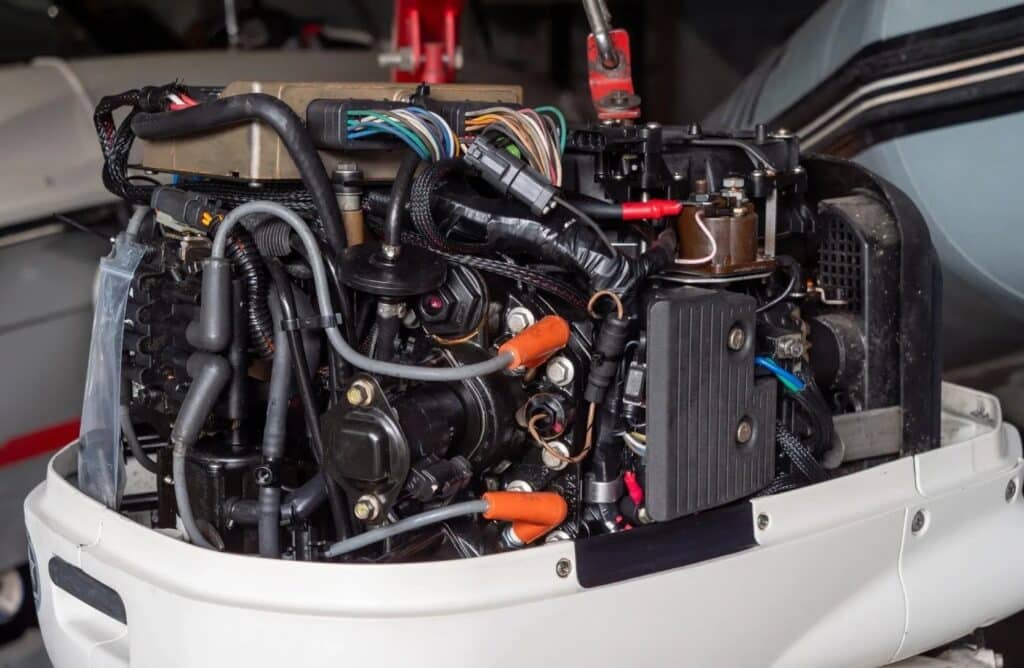
Modern outboard motors often contain sophisticated electrical and electronic systems. Batteries, wiring, sensors, control modules, ignition components, and charging systems can all affect engine operation.
Marine environments create additional challenges because moisture and corrosion can damage electrical connections.
An engine may therefore experience intermittent starting problems or warning signals caused by an electrical fault rather than a mechanical failure.
During Outboard Engine Repair, technicians may test battery voltage, inspect grounds and connections, check charging performance, and use diagnostic equipment where appropriate.
Cooling Problems Need Fast Attention
A functioning cooling system is critical for an outboard engine. Water must circulate correctly to remove heat generated during operation.
Restricted water passages, damaged water pump components, blocked intake screens, or other cooling problems can reduce water flow.
Warning indicators or abnormal temperature behavior should not be ignored. Operating an overheating engine can cause significant damage to internal components.
Routine inspection of cooling system components is therefore an important part of preventive maintenance.
Compression Problems Can Indicate Internal Wear
If an engine has persistent performance problems that cannot be explained by fuel, ignition, or electrical components, internal mechanical condition may need to be investigated.
Compression testing can provide information about the condition of the engine’s cylinders. Low or uneven compression may be associated with internal wear or damage.
A professional technician can determine whether additional testing is necessary and whether the issue involves a specific cylinder or another part of the engine.
This type of diagnosis is more useful than replacing unrelated components without identifying the actual source of the problem.
Propeller Condition Also Affects the Engine
Engine performance is closely connected to propeller condition. A damaged or incorrectly sized propeller can affect acceleration, RPM, fuel efficiency, and vibration.
Fishing line wrapped around the propeller shaft can also create problems and should be removed carefully.
Regular propeller inspection can help identify dents, cracks, corrosion, or other damage. If engine RPM does not match the manufacturer’s recommended operating range, propeller selection may also need to be reviewed.
Storage Can Create New Problems
Boats that spend several months out of the water require proper preparation before storage. Fuel, batteries, cooling systems, and other components can all be affected by extended periods without use.
When a boat returns to service after storage, owners should not assume that the engine will operate exactly as it did at the end of the previous season.
A pre-season inspection can identify battery issues, deteriorated fuel, corrosion, fluid problems, and other conditions before the boat returns to regular operation.
What Professional Diagnosis Can Involve
The diagnostic process depends on the symptoms and engine model. A technician may begin with a visual inspection and then perform more specific tests.
Depending on the situation, diagnosis may involve checking:
- Fuel delivery
- Ignition components
- Battery and charging system
- Electrical connections
- Cooling system
- Engine compression
- Propeller condition
- Diagnostic fault codes
- Steering and control components
The goal is to identify the underlying cause instead of simply replacing parts based on assumptions.
Preventive Maintenance Protects Reliability
Regular maintenance can reduce the likelihood of unexpected failures. Following the manufacturer’s service schedule is a good starting point, but boat owners should also pay attention to how the engine behaves between scheduled services.
Keeping maintenance records can help identify recurring problems and show when important components were last inspected or replaced.
Owners should also address unusual symptoms promptly. Delaying service may allow a relatively simple issue to develop into a more expensive repair.
Final Thoughts
Outboard engines combine mechanical, electrical, fuel, and cooling systems that must work together for reliable performance. When one component begins to fail, the symptoms may appear in another part of the engine’s operation.
Professional Outboard Engine Repair focuses on identifying these problems accurately and addressing them before they become larger failures. Regular maintenance, careful pre-season inspections, and attention to early warning signs can all help boat owners keep their engines ready for the water.